
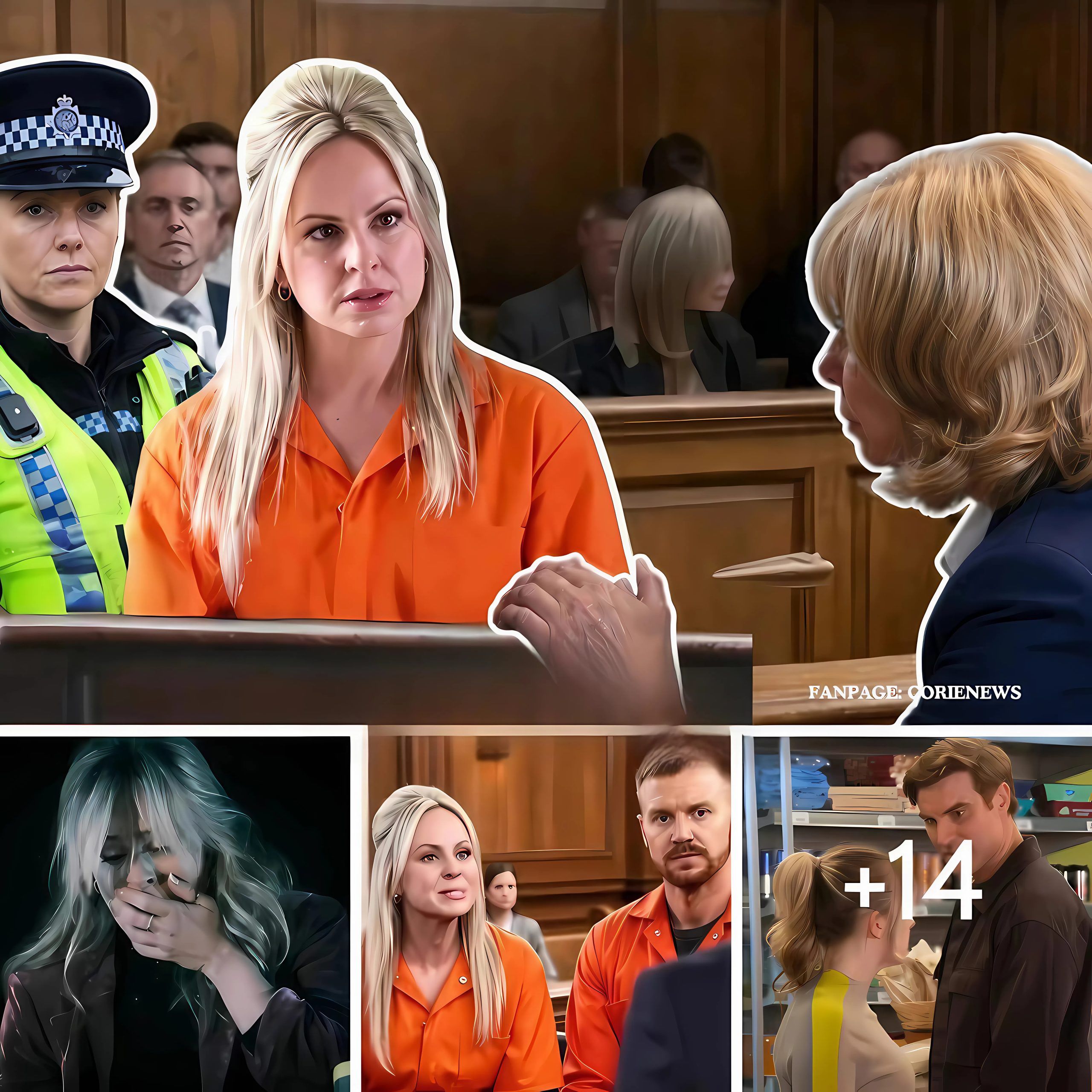
JUSTICE FOR SARAH! Sarah Finally Proven Innocent of Theo’s Murder! | Coronation Street
JUSTICE FOR SARAH! Sarah Finally Proven Innocent of Theo’s Murder! | Coronation Street
What unfolds in Weatherfield this time is not just another twist in the long-running storm surrounding the Platt family, but a full-scale emotional collapse that redefines everything we thought we knew about survival, guilt, and truth. At the center of it all is Sarah Platt, a woman whose life has been shaped by chaos for decades, now pushed into a situation where one wrong assumption turns her world into a nightmare she can’t escape.
The story begins in the aftermath of Theo Silverton’s death, an incident that has haunted Sarah from the moment it happened. For weeks, she has lived under the crushing belief that she was responsible, that one desperate act on a scaffolding led to an irreversible tragedy. But what initially looked like a clear-cut case of guilt slowly unravels into something far more complicated, exposing a web of misunderstandings, manipulation, and hidden truths that no one in Weatherfield was prepared for.
Sarah’s panic is not just about the law closing in. It is about history repeating itself. Long-time viewers know she has already survived the psychological shadow of earlier trauma, particularly the lingering legacy of Richard Hillman’s era, which permanently reshaped how she reacts to danger. Every time she feels cornered, her instincts are no longer rational—they are survival-based, almost primal. So when Theo threatened her and mocked deeply personal losses, something inside her snapped, not out of calculation, but out of emotional overload.
At first glance, her strike against Theo seems like self-defense. But the deeper truth is more layered. Sarah wasn’t only reacting to Theo in that moment—she was reacting to years of pressure, manipulation, and emotional violence that had built up inside her. It was a psychological breaking point disguised as a single violent act.
As fear spreads through her life, Sarah finds herself relying heavily on Gary Windass, who becomes both her protector and her downfall. Gary helps conceal parts of the truth, believing he is shielding her from consequences. But in reality, his involvement traps her in a collapsing lie. Every step he takes to protect her removes another exit route. What begins as loyalty slowly transforms into a moral cage.
Meanwhile, the pressure inside the Platt household intensifies. David Platt is already dealing with his own emotional instability, while Gail Platt senses that her family is once again on the verge of breaking apart. The Platts, a family defined by resilience, are now stretched to their limit, with each member absorbing the shockwaves of Sarah’s secret in different and damaging ways.
Then comes the emergence of Jodie Ramsay, whose chaotic presence acts like a mirror Sarah does not want to look into. Jodie Ramsay represents everything Sarah suppresses—anger, disorder, emotional instability. Their confrontation is not just about stolen items or accusations; it is about identity. When Jodie lashes out, Sarah is forced to confront the uncomfortable truth that the chaos she sees in others also exists within her.
As tension escalates, Sarah’s mental state deteriorates further. She begins to feel hunted—not just by police suspicion, but by her own conscience. Sleep becomes impossible, every sound feels like a warning, and every conversation feels like a trap. The line between reality and paranoia starts to blur.
The situation reaches breaking point when the storyline collides with a catastrophic multi-vehicle crash involving characters from the broader crossover event. In the chaos, Weatherfield becomes something closer to a war zone than a street. Smoke, fire, and confusion dominate the scene, and in the middle of it all, Sarah’s attempt to escape becomes a tragic miscalculation.
The irony is devastating: Theo Silverton was not even dead at the time Sarah believed she had killed him. He was still alive during key moments of the unfolding chaos, meaning Sarah’s entire decision to flee was built on a misunderstanding. That single fact reframes everything—her fear, her escape, and ultimately her fate.
The crash itself becomes symbolic. It is not just a physical accident but a representation of decades of unresolved trauma within the Platt family. Sarah’s history with near-death experiences, including earlier childhood incidents tied to reckless driving and emotional instability, resurfaces in a cruel loop of repetition. The past does not stay buried—it returns in motion, at speed, on a rain-slicked road.
The shadow of Richard Hillman also looms heavily over the narrative. His legacy of terror, particularly the infamous canal incident, continues to shape how Sarah perceives vehicles, control, and escape. In her mind, cars are never just transport—they are potential endings. That subconscious fear feeds directly into her panic during the crash, pushing her further into irrational survival decisions.
As the aftermath unfolds, confusion spreads through Weatherfield. Evidence begins to surface suggesting that Sarah may never have been guilty of murder at all. The case against her collapses under scrutiny, revealing inconsistencies in witness statements, timeline errors, and missing context that point toward a far more complicated sequence of events.
For the Platts, however, truth arrives too late.
Gary Windass now faces devastating consequences for his involvement. What he thought was protection becomes potential obstruction of justice. If investigators trace his actions, he may become the only person legally accountable for the cover-up surrounding Sarah’s situation. His loyalty, once seen as heroic, is now morally and legally ambiguous.
At the same time, Maria Connor begins to question the emotional entanglements and secrets surrounding Gary, adding further strain to an already unstable situation. Trust within Weatherfield fractures as everyone realizes how far the truth has been distorted.
The emotional impact on Gail Platt is immeasurable. She has spent her life surviving loss, betrayal, and repeated family tragedy. Now she faces the possibility that her daughter may have been innocent all along, yet still paid the ultimate price. The Platt family curse, long whispered about by fans, feels more real than ever.
But the biggest shock is not the crash itself—it is the revelation that Sarah’s assumed guilt was never properly proven. The evidence tying her to Theo’s supposed murder unravels completely, exposing a chain of misunderstandings that leads to a shocking conclusion: Sarah Platt is officially cleared.
Her name is finally restored, but the victory is hollow. There is no celebration, no triumph—only grief, confusion, and the unbearable weight of what has been lost. Justice arrives, but it arrives like a delayed storm that destroys everything before it clears the sky.
The wider implications ripple through Weatherfield. Questions emerge about whether someone manipulated events behind the scenes. Rumors begin to circulate about shadowy figures like Graham Foster, whose presence near the chaos suggests deeper involvement in orchestrating parts of the disaster. Nothing is confirmed, but suspicion lingers like smoke after fire.
For viewers, the tragedy becomes a reflection on how soap storytelling itself has evolved. High-intensity crossovers, multi-show events, and spectacle-driven disasters now dominate the narrative landscape. While visually explosive, they often leave behind emotional casualties—characters whose endings feel rushed, fragmented, or swallowed by scale.
Sarah’s story becomes the clearest example of this shift. A character who once survived decades of grounded, character-driven drama is ultimately consumed by a spectacle too large for one street to contain.
In the end, the truth does come out: Sarah Platt was not the murderer of Theo Silverton. But by the time that truth is confirmed, her life has already been reshaped beyond repair. Fear, guilt, and chaos have already done their work.
The final image left behind is not one of justice fulfilled, but of a family standing in the aftermath of yet another collapse—asking not only what happened, but how many more times they can survive it.
And in Weatherfield, that question never has an easy answer.