
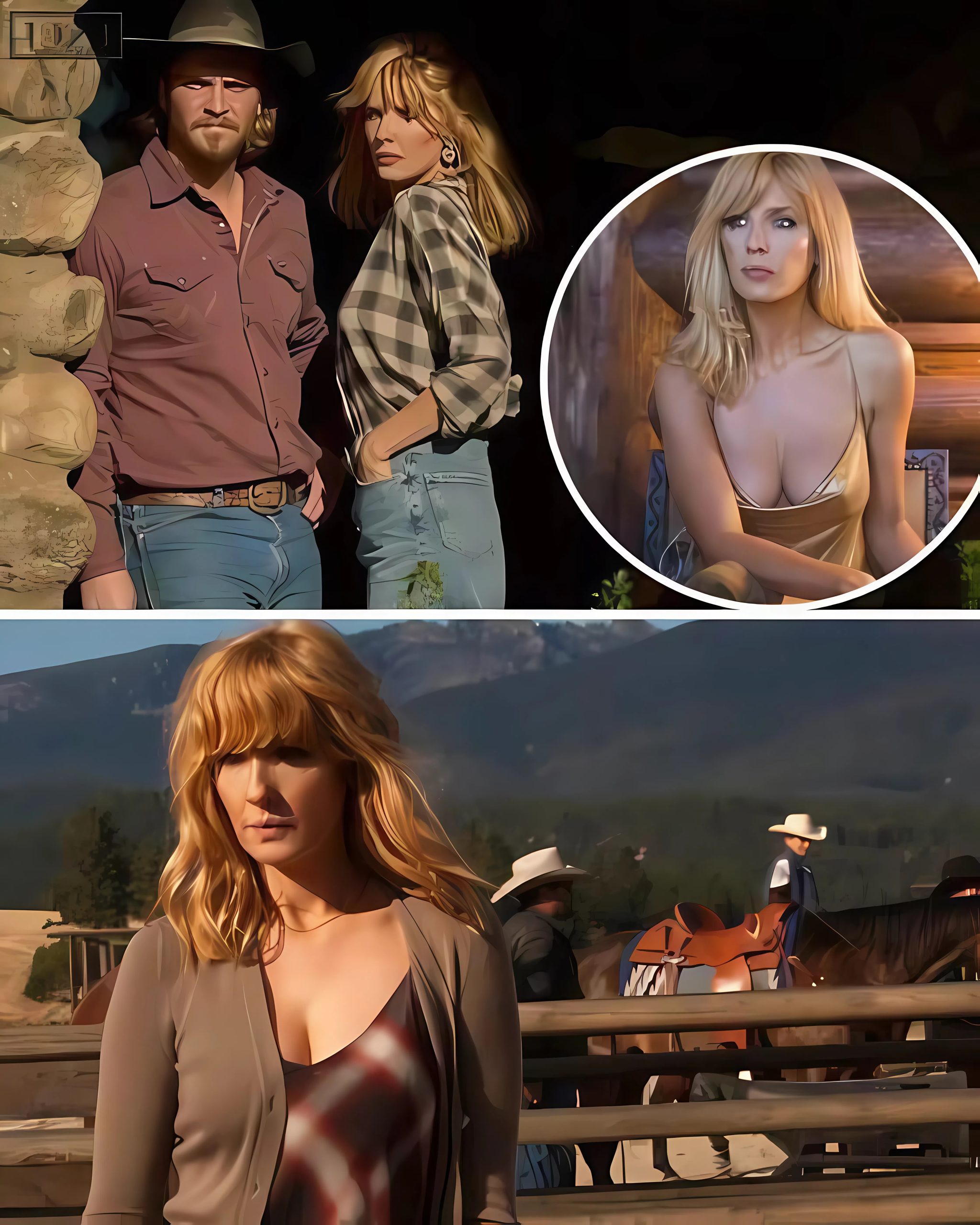
Did Yellowstone Just Lose Kelly Reilly Forever? The Unsettling Truth Behind Her Disappearance in the Finale
When Yellowstone aired its dramatic final episodes in December 2024, viewers were left with a burning question: Where was Beth Dutton? Kelly Reilly’s portrayal of the fiercely ambitious Dutton daughter had become a cornerstone of the show, but in the series’ closing moments, she was conspicuously absent. Was this a creative decision or a behind-the-scenes drama? As the curtain closed on the Dutton family saga, the mystery surrounding Beth’s disappearance captivated fans.
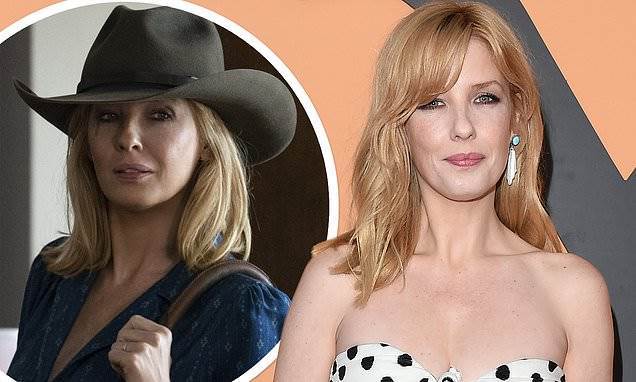
A Plan Set in Stone: Why Beth’s Absence Wasn’t a Mistake
Fans hoping for a more dramatic presence from Beth in the final episodes were disappointed when she wasn’t front and center. However, as it turns out, this absence wasn’t a result of behind-the-scenes tension or a scheduling conflict.
Did Yellowstone Just Lose Kelly Reilly Forever? The Unsettling Truth Behind Her Disappearance in the Finale
When Yellowstone returned for its highly anticipated final stretch of episodes in December 2024, audiences expected an explosive conclusion that would bring the long-running Dutton family saga to a decisive and emotionally charged end. Instead, what lingered after the final credits rolled was not just the fate of the ranch or the future of the Dutton legacy—but a far more unsettling question that immediately took over fan discussions everywhere: where was Beth Dutton?
For a character as dominant and unforgettable as Beth, her sudden absence from the closing moments felt almost unreal. Over the years, Beth Dutton had evolved into one of the emotional and narrative anchors of the series. Fierce, volatile, fiercely intelligent, and unapologetically ruthless when protecting her family, she was never a background presence. That is why her disappearance in the finale struck viewers with such force—it wasn’t just noticeable, it felt like a void at the center of the story.
Naturally, speculation erupted almost instantly. Was this a behind-the-scenes issue involving scheduling conflicts? Was there tension off camera? Or was this a carefully crafted storytelling choice designed to leave viewers unsettled and questioning everything they thought they knew about the ending? As conversations spread online, the absence of Beth Dutton became one of the most debated mysteries of the show’s final chapter.
At the center of it all remains the performance of Kelly Reilly, whose portrayal of Beth had become inseparable from the identity of Yellowstone itself. Her character wasn’t just part of the ensemble—she was often the emotional ignition point for nearly every major conflict. So when the final episodes arrived without her in the spotlight, it felt less like a simple narrative shift and more like a deliberate absence that demanded explanation.
A Plan Already Written Into the Ending: Beth’s Absence Was Intentional
As the finale unfolded, viewers expecting Beth to dominate key final confrontations were instead met with a surprising narrative structure that pushed her into the margins. Rather than being at the center of the closing chaos, she was largely absent from the pivotal moments that resolved the Dutton family’s ultimate fate. For many fans, this felt jarring—almost like a piece of the story had been removed at the last second.
However, as discussions around the finale developed, it became clear that Beth’s limited presence was not the result of external issues behind the scenes. Instead, the structure of the ending suggests that her absence was deliberately embedded into the story’s design from the beginning of the final arc. The creative direction appears to have been aimed at reshaping the emotional focus away from individual character dominance and toward the broader conclusion of the Dutton legacy itself.
Rather than centering everything on Beth’s fiery confrontations or her unpredictable decisions, the finale shifts its attention to resolution, consequence, and the passing of an era. In that sense, Beth’s reduced presence becomes symbolic rather than accidental. She is no longer the driving force of chaos she once was; instead, her absence emphasizes the idea that the world she helped shape is now moving beyond her influence.
This interpretation reframes what initially felt like a glaring omission into something more deliberate. The silence surrounding Beth in the final moments becomes part of the storytelling language—suggesting distance, unresolved tension, and a future that no longer revolves around her constant battles.
Why Fans Felt Something Was Missing
Even with this narrative explanation, many viewers could not shake the feeling that something essential had been stripped away. Beth Dutton had, over multiple seasons, become one of the most compelling reasons audiences tuned in. Her confrontations, her emotional volatility, and her deeply complex relationship with her family—especially her father John Dutton—had consistently driven some of the show’s most memorable moments.
So when she was absent from the final emotional beats of the series, it created an immediate sense of imbalance. The finale still delivered resolution for the Dutton ranch and its surrounding conflicts, but without Beth’s presence at the center of those moments, the emotional impact felt fundamentally different.
Some fans interpreted this as symbolic storytelling: Beth, once the embodiment of the ranch’s chaos and survival instinct, is now separated from the final outcome because her story belongs to an earlier phase of the Dutton saga. Others, however, felt it was an unsatisfying omission, arguing that her character had been too central to simply fade into the background at the most critical moment.
The divide in interpretation only intensified the mystery, turning Beth’s absence into one of the most talked-about aspects of the finale rather than the resolution itself.
Was It Creative Direction or a Hidden Signal?
One of the most persistent questions that emerged after the finale was whether Beth’s disappearance was purely a narrative decision or if it hinted at something deeper behind the scenes. In most television productions, sudden absences of major characters often lead fans to suspect off-screen complications. However, in this case, the structure of the story itself seems to resist that interpretation.
Instead, the writing suggests a thematic purpose. Beth’s absence appears to reflect the idea that the Dutton world is no longer defined by individual power struggles but by the consequences of everything those struggles created. The ranch, the family legacy, and the land itself become the focal point, while characters who once dominated the emotional landscape are intentionally stepped back.
Still, because of how central Kelly Reilly had become to Yellowstone, it was almost inevitable that viewers would interpret her reduced presence as something more dramatic than it actually was. In long-running serialized storytelling, especially one built on strong character identity, absence is rarely neutral. It is always read as meaningful—even when it is simply part of a structural choice.
The Emotional Weight of Beth’s Reduced Role
What makes this finale particularly intriguing is not just Beth’s absence, but how that absence reshapes the emotional tone of the entire ending. Without her presence in key confrontations, the finale takes on a quieter, more reflective energy. The focus shifts toward aftermath rather than active conflict, toward resolution rather than escalation.
This tonal shift changes how audiences experience closure. Instead of witnessing Beth’s signature intensity in the final moments, viewers are left with a sense of distance, as though the story has intentionally stepped away from the characters who once defined its emotional extremes.
In many ways, this makes Beth’s absence even more powerful. It forces the audience to confront what the story looks like without its most volatile emotional engine. Whether that is satisfying or frustrating depends entirely on how viewers connected with her journey throughout the series.
The Legacy She Leaves Behind
Even though Beth is not physically present in the final stretch, her influence remains deeply embedded in the fabric of the story. Everything she fought for, destroyed, protected, and reshaped continues to echo through the outcome of the Dutton family’s fate. Her absence does not erase her impact—it amplifies it by showing how much of the story she already consumed while she was present.
In this way, the finale positions Beth not as a missing piece, but as a lingering force whose presence is still felt even when she is not on screen. The world of Yellowstone cannot be understood without her influence, and the final episodes make that unmistakably clear.
Conclusion: Absence as the Final Statement
Ultimately, the mystery surrounding Beth Dutton’s disappearance in the finale becomes less about where she went and more about what her absence represents. Whether viewed as a bold artistic choice or a controversial narrative decision, it undeniably reshapes how the ending is experienced.
For fans of Yellowstone, the final image is not just of a ranch, a family, or a legacy—it is also the haunting silence left behind by one of its most unforgettable characters. And for Kelly Reilly, the conversation surrounding Beth only reinforces how deeply her performance is woven into the identity of the series.
In the end, the finale does not fully answer every question it raises. Instead, it leaves viewers with something more lingering: the unsettling realization that sometimes, the most powerful presence in a story is the character who is no longer there at all.