
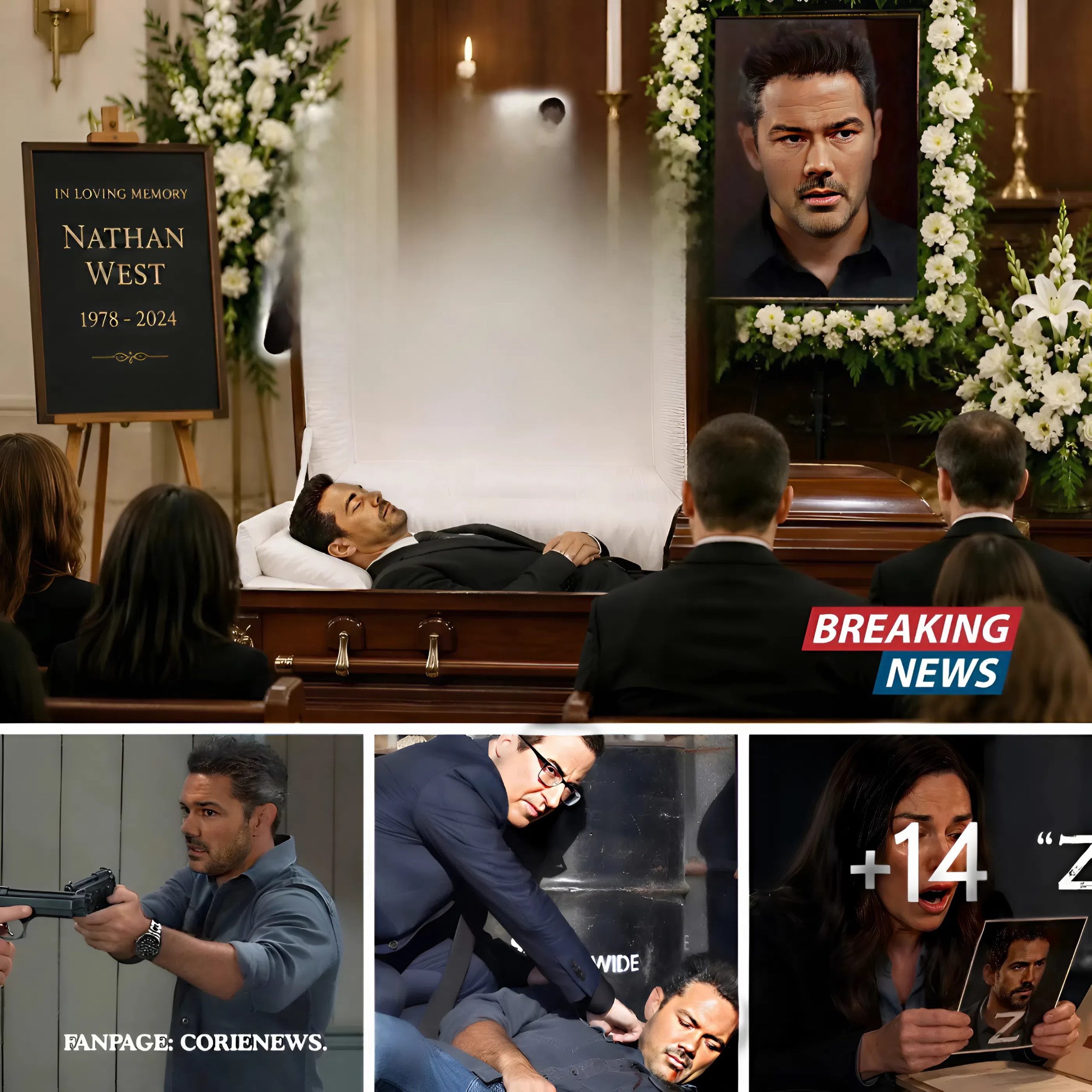
Shock! Cassius never died, Z staged his death for a critical mission | General Hospital Spoilers
For fans of General Hospital, one lesson has remained true for decades: unless a death is absolutely confirmed beyond question, there is always room for a shocking return. That is exactly why the dramatic events on Spoon Island have sparked endless speculation. While nearly everyone in Port Charles has accepted that Cassius perished during the explosive confrontation, many clues suggest that the truth could be far more complicated than anyone realizes.
The battle on the island certainly looked like the end of Cassius’ story. After the violent showdown, Z examined him briefly before quickly shifting his attention to getting Jocelyn to safety. At first glance, it appeared to be nothing more than a practical decision made during a dangerous crisis. However, the more closely the scene is examined, the more suspicious it becomes. Z barely spent any time confirming Cassius’ condition before moving on, leaving viewers without the kind of undeniable proof that usually accompanies the permanent exit of a major character.
That missing confirmation may be the biggest clue of all.
Soap operas have built entire storylines around characters presumed dead, only to reveal months later that they survived under carefully orchestrated circumstances. General Hospital has mastered that formula over the years, making fans understandably skeptical whenever a supposedly fatal event happens offscreen or lacks a proper farewell.
What happened after the Spoon Island confrontation remains a mystery.
Jocelyn was immediately transported to General Hospital for treatment, and the narrative shifted almost entirely toward her recovery. Meanwhile, Cassius simply disappeared from the storyline. No detailed medical report surfaced. No public identification of his body took place. No emotional funeral united the residents of Port Charles in mourning. Instead, an unusual silence settled over the entire situation.
That silence may have been completely intentional.
One intriguing possibility is that Z secretly arranged for Cassius to be removed from the island before anyone else realized what was happening. Instead of allowing authorities to recover the body, perhaps Cassius was quietly transported aboard Z’s helicopter and flown to a highly classified medical facility. Such a location could provide advanced treatment while keeping his survival hidden from enemies and allies alike.
It would certainly fit Z’s reputation.
Throughout his time with the WSB, Z has consistently demonstrated that he values successful outcomes far more than complete honesty. He carefully calculates every move, often keeping critical information from nearly everyone around him. If protecting a dangerous operation required staging someone’s death, few would be surprised if Z considered that an acceptable sacrifice.
From his perspective, convincing the world that Cassius died could be the safest solution available.
If Cassius truly survived, remaining hidden would offer enormous strategic advantages.
The Cold Fusion investigation remains one of the most dangerous operations currently unfolding. Numerous powerful individuals have been connected to the conspiracy, yet very few have accepted responsibility for their roles. A supposedly deceased Cassius cannot defend himself against accusations, challenge official reports, or reveal information that could expose others involved in the scheme.
That makes him the perfect scapegoat.
As long as everyone believes Cassius died a villain, the official narrative remains secure. Every unanswered question can conveniently be blamed on someone who is no longer around to contradict the story. Those truly pulling the strings gain valuable time while investigators stop looking any deeper.
This possibility also explains why Z might choose secrecy over transparency.
Instead of simply saving Cassius’ life, Z could be protecting a much larger intelligence operation. Allowing the world to believe Cassius is gone would give the WSB tremendous control over unfolding events while its agents continue investigating hidden enemies from the shadows.
In Port Charles, information has always been the most valuable weapon.
Keeping Cassius alive in complete secrecy would place that weapon squarely in Z’s hands.
Another reason this theory continues gaining momentum involves Cassius himself. Ever since his arrival, he has generated mystery, emotional conflict, and countless unanswered questions. His apparent connection to Nathan immediately gave the character emotional significance, opening the door to complicated family revelations and future drama.
It seems difficult to believe the writers would introduce such a layered character only to eliminate him before those storylines have the opportunity to unfold.
There is still so much left unexplored.
Questions surrounding his true loyalties remain unanswered. His complicated relationships have barely begun developing. Most importantly, his connection to Nathan promises emotional consequences that have yet to be fully explored.
Eliminating all of that potential so quickly would feel unusually abrupt for General Hospital, a series famous for patiently building long-term payoffs.
Jocelyn’s situation also becomes much more interesting if Cassius is secretly alive.

With everyone believing he died on Spoon Island, Jocelyn is free to describe him however circumstances require. She can portray him as Sidwell’s willing accomplice during the Cold Fusion operation without fear of contradiction. Every statement she makes automatically becomes accepted truth because the one person capable of challenging her version is presumed dead.
That creates an incredibly convenient situation.
Whether intentional or not, the official story gives several powerful individuals exactly what they need: a permanent witness who can never testify.
Unless, of course, he returns.
Imagine months passing with Port Charles fully embracing the belief that Cassius died during the island mission. Life gradually moves forward. Investigations begin closing. The WSB quietly protects its reputation. Those responsible for manipulating events become increasingly confident that every dangerous secret has been buried forever.
Then everything changes.
Without warning, Cassius walks back into Port Charles alive.
The shockwaves would be immediate.
Jocelyn would be forced to confront the possibility that everything she believed about Spoon Island was incomplete. Z would finally have to explain why he allowed the world to believe an innocent—or perhaps misunderstood—man had died. Every person who benefited from Cassius accepting the blame would suddenly find themselves facing uncomfortable questions.
The carefully constructed lies would begin collapsing one after another.
Even more importantly, Cassius himself could finally reveal what actually happened during those missing moments after the battle ended.
Did Z rescue him?
Was the staged death planned before the confrontation?
Or did unexpected circumstances force Z to improvise an elaborate deception to keep a valuable asset alive?
Each possibility opens the door to even larger conspiracies waiting beneath the surface.
The writers have also cleverly avoided giving audiences absolute closure. There was no extended goodbye, no emotional memorial service, and no indisputable confirmation that Cassius truly died. Instead, they left enough uncertainty to encourage endless fan theories.
That storytelling choice rarely happens by accident.
Soap operas frequently leave these subtle gaps because uncertainty keeps viewers invested. Every unanswered question encourages audiences to continue speculating, discussing clues, and anticipating future surprises.
In many ways, mystery becomes just as entertaining as the eventual reveal itself.
Every passing week without definitive answers only strengthens the possibility that something significant remains hidden.
Of course, there is always the chance that Cassius genuinely died on Spoon Island. That outcome cannot be completely dismissed. However, longtime viewers understand better than anyone that General Hospital rarely wastes a character filled with this much potential, especially when so many important storylines remain unfinished.
Until undeniable evidence appears, skepticism seems entirely reasonable.
The growing silence surrounding Cassius feels less like a conclusion and more like careful preparation for an explosive second act.
If Z truly orchestrated one final deception to protect both Cassius and an ongoing WSB mission, the eventual truth could become one of the biggest twists the series has delivered in years.
When that day finally arrives, every conversation, every accusation, and every decision made after Spoon Island will suddenly carry an entirely different meaning.
Port Charles will discover that the man everyone mourned never actually died.
Instead, his disappearance was simply the opening move in a far more dangerous game—one designed to expose hidden enemies, protect classified secrets, and ultimately change the balance of power throughout the city.
If these theories prove correct, Cassius’ return will not simply shock the residents of Port Charles. It will completely rewrite everything viewers thought they knew about the Spoon Island tragedy, proving once again that on General Hospital, death is sometimes nothing more than the perfect disguise.