
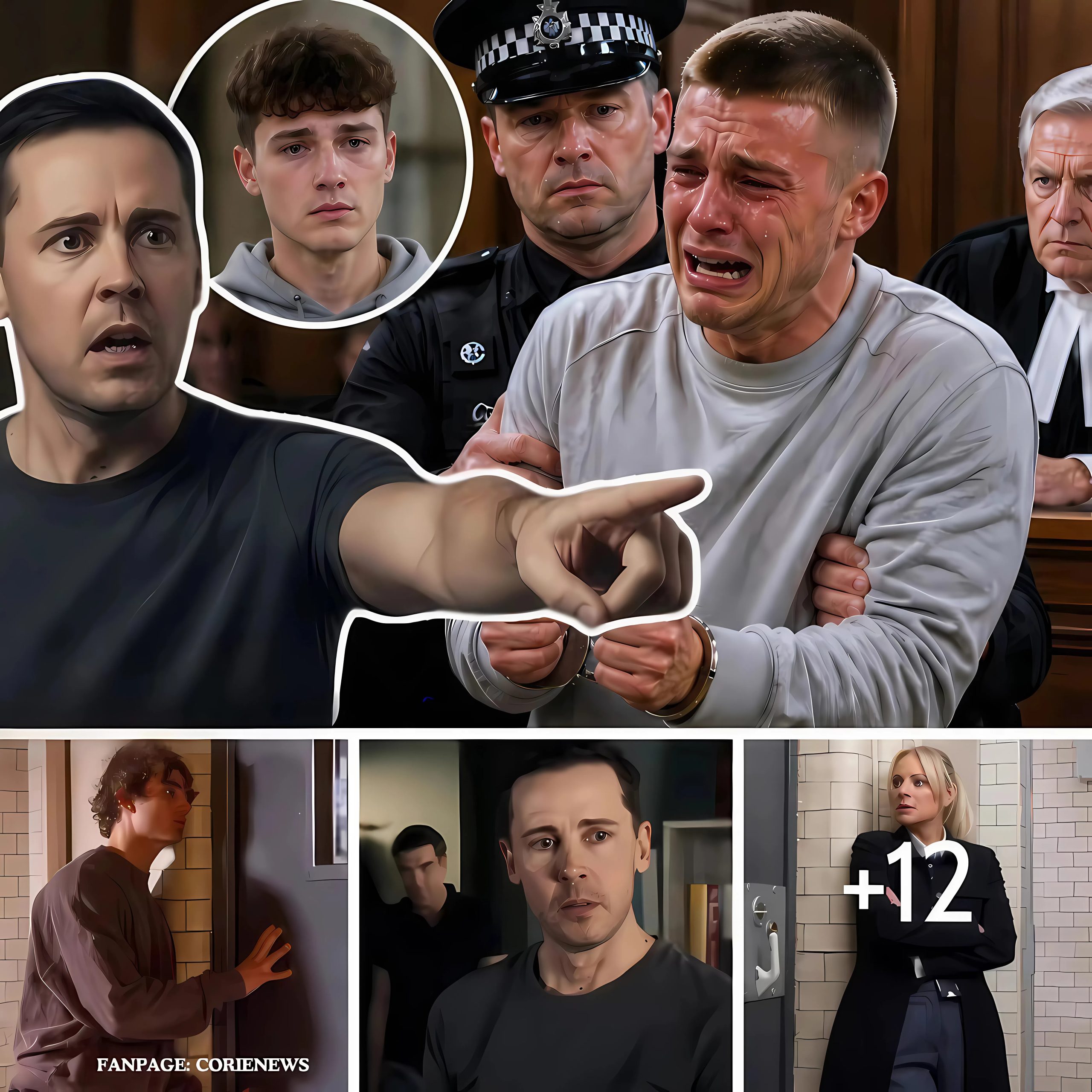
Theo’s Death Finally Gets a Shocking Verdict! Brody SENTENCED TO LIFE!
The streets of Weatherfield have witnessed murders, betrayals, explosions, and secrets buried beneath decades of family feuds, but nothing has shaken Coronation Street quite like the death of Theo Silverton. What began as the downfall of one of the soap’s most toxic villains has spiraled into a nightmare that threatens to destroy several lives at once. And now, after weeks of accusations, panic, and shocking twists, the verdict is finally in. Brody Michaelis has been sentenced to life in prison for Theo’s murder. But as the courtroom doors close and the cobbles erupt in disbelief, one haunting question remains. Did the police truly catch a killer, or have they condemned the wrong person while the real murderer walks free?
Theo Silverton was never just another soap villain. He was manipulative, cruel, and psychologically destructive in a way that felt deeply personal. His relationship with Todd Grimshaw became one of the darkest stories the street has seen in years. Theo isolated Todd from the people who loved him, shattered his confidence, and used fear as a weapon until Todd barely recognized himself anymore. Even after the horrifying attack that left Todd bruised and terrified, Theo still managed to hold emotional power over him. That was the true horror of Theo. He didn’t just hurt people physically. He poisoned their minds.
So when Betsy Swain discovered Theo’s lifeless body on the night that should have been a celebration, the reaction across Weatherfield was complicated. Shock spread instantly, but underneath the horror was something else. Relief. Theo was gone. The monster who had terrorized Todd could never hurt him again. Yet that relief didn’t last long. Within hours, the street transformed into a battlefield of suspicion, paranoia, and hidden agendas.

The police investigation moved quickly, and almost everyone had a motive. Todd had suffered unbearable abuse. Summer Spellman had been psychologically tormented for months. Gary Windass had openly despised Theo and viewed him as a threat to the entire neighborhood. George Shuttleworth had already shown violent anger toward him before. Even Sarah Platt appeared nervous and secretive as whispers spread through the community. Every conversation became loaded with fear. Every strange glance suddenly looked guilty.
But the biggest shock came when the police shifted their attention toward Brody Michaelis.
Brody had always lived on the edge between redemption and disaster. One moment he looked like a troubled teenager trying to rebuild his life, and the next he slipped back into crime and self-destruction. His troubled upbringing, his history with the young offender system, and his constant struggle to find stability made him an easy target in the eyes of the law. The moment detectives discovered his fingerprints on Todd’s missing phone, the narrative changed overnight. Suddenly, the damaged teenager became the prime suspect in the biggest murder case Weatherfield had seen in years.
The evidence appeared overwhelming. Todd’s missing phone had been traced to a pawn shop, and Brody’s fingerprints were all over it. DS Lisa Swain wasted no time bringing him in for questioning. Before long, rumors exploded across the street. Some believed Brody had snapped after years of emotional turmoil. Others thought he had been manipulated into violence. But many quietly wondered whether the police had simply found the perfect scapegoat.
Brody’s downfall was devastating to watch because he had only recently started believing his life could improve. Discovering that Kit Green was his biological father should have given him hope, yet instead it left him emotionally fractured. Brody didn’t know who he was anymore. Half criminal. Half policeman. He was caught between two worlds that both seemed ready to reject him.
His relationship with Kit became one of the emotional centers of the investigation. Kit genuinely appeared to care about Brody, treating him with patience and understanding when nobody else would. Yet there was always something uneasy about their bond. Was Kit trying to help his son, or was he trying to control him? As the evidence against Brody mounted, Kit faced an impossible choice. Protect his badge or protect his blood.
The pressure nearly destroyed him.
Watching Brody dragged away in handcuffs shattered Kit emotionally because every accusation against his son felt like a personal failure. If Brody was guilty, then Kit’s attempts to guide him had meant nothing. But if Brody was innocent, then Kit had failed to shield him from the very system he represented. Every piece of evidence became a weapon pointed directly at both of them.
Meanwhile, Summer Spellman’s breakdown only deepened the mystery. In one of the investigation’s most heartbreaking twists, Summer announced that she was willing to plead guilty to manslaughter just to end the nightmare. The confession stunned everyone. But many people questioned whether it was a real admission of guilt or the final consequence of Theo’s manipulation. Theo had spent months emotionally crushing the people around him, and even in death he continued destroying lives.
Summer’s willingness to sacrifice herself revealed how emotionally exhausted she had become. She no longer believed she deserved freedom. She wanted punishment because punishment felt easier than continuing to survive the trauma Theo left behind. For viewers, it was painful to watch because it felt like Theo was still winning from beyond the grave.
As chaos consumed the street, another storyline quietly added even more tension. Daniel Osborne’s life was falling apart. Fueled by the Truth Teller posts spreading online, Daniel spiraled into anger, drinking, and emotional instability. His reckless behavior endangered his family and pushed him dangerously close to losing control entirely. While residents focused on Daniel’s meltdown, some fans became convinced the writers were deliberately distracting everyone from the real killer.
And perhaps they were.
Because the more evidence emerged against Brody, the less convincing it seemed.
The biggest flaw in the case was the phone itself. If Brody had murdered Theo, why would he casually pawn the victim’s phone at a local shop? It was sloppy, reckless, and practically guaranteed to leave a trail leading directly back to him. Murderers usually destroy evidence. Petty thieves sell it for quick cash. That detail changed everything for many viewers.
Brody’s actions felt less like the behavior of a calculating killer and more like the desperate survival instincts of a damaged teenager. Growing up surrounded by instability had taught him to grab whatever opportunities he could before they disappeared. He likely saw the phone as money, not as evidence connected to a murder investigation. But by the time he realized the danger, it was already too late.
Still, the prosecution pushed forward aggressively.
The courtroom drama became brutal. Prosecutors painted Brody as violent, unstable, and incapable of change. They emphasized his criminal history, his emotional outbursts, and his connection to the victim’s property. Every mistake Brody had ever made was dragged into the spotlight and weaponized against him. His defenders argued that the case relied too heavily on circumstantial evidence, but public opinion had already begun turning against him.
Even worse, Brody himself struggled to defend his innocence convincingly. Years of anger and distrust made him lash out under pressure. Every emotional reaction reinforced the image of him as a dangerous young offender rather than a frightened teenager trapped in circumstances beyond his control.
When the guilty verdict was finally announced, Weatherfield froze.
Todd looked devastated. Summer broke down completely. Kit stood motionless, unable to hide the horror on his face as his own son was sentenced to life behind bars. The courtroom became silent except for Brody’s desperate cries insisting he didn’t kill Theo.
But what truly terrified the community was the feeling that the story wasn’t over.
Because too many questions remain unanswered.
The pathology report revealed Theo suffered blunt force trauma before his fatal fall. That means someone attacked him violently before he died. Yet the prosecution never fully explained who delivered the fatal blow or why certain timelines still didn’t add up. Suspicion continues to linger around several residents, especially Gary Windass, whose hatred for Theo ran deep. Others remain convinced Sarah Platt is hiding crucial information. Some even believe multiple people were involved in Theo’s death and covered for each other afterward.
The possibility of a cover-up has become impossible to ignore.
If Brody truly is innocent, then Coronation Street has delivered one of its darkest twists ever. A damaged teenager with a troubled past has been condemned because his reputation made him easier to blame than the real killer. That possibility transforms the entire story from a murder mystery into a tragedy about trauma, prejudice, and the devastating consequences of being labeled dangerous before you ever get the chance to change.
And the most heartbreaking part is that Brody had finally started believing he could become someone better.
Before the arrest, there were genuine signs of growth. He was trying to work honestly. He was beginning to trust people again. For the first time in years, he looked like a teenager who might escape the cycle of crime and chaos that defined his family. But one terrible decision involving a stolen phone destroyed everything. Now, instead of redemption, he faces a lifetime behind bars.
Yet viewers know Coronation Street rarely ends its biggest stories with simple answers.
The producers have already hinted that explosive revelations are still coming. Flashbacks from the night of Theo’s death may expose hidden truths that completely reshape the investigation. And if Brody was framed, intentionally or accidentally, the fallout will destroy relationships across Weatherfield forever.
One thing is certain. Theo Silverton may be dead, but his shadow still hangs over every corner of the street. Even in death, he continues tearing lives apart. Families are broken. Friendships are collapsing. Innocent people may be paying the price for his cruelty.
And somewhere on those cobbles, the truth is still waiting to explode.